


Water Chiller
Your Premier Water Chiller Manufacturer
Anyda specializes in supplying quality water chillers, which are carefully qualified and selected to ensure the best value for customers and end users alike.
Positive Team
We have a team of experienced managerial personnel, a professional R&D group, and skilled technicians.
Quality Guarantee
We manufacture in accordance with ISO9001 and water authority standards. We conduct hydraulic testing in our dedicated testing facility, reducing onsite costs.
Competitive Prices
We believe that high-quality hydroponic equipment and supplies should be accessible to everyone, regardless of their budget.
After Sales Support
We handle and solve any technical problems related to our machines in a timely manner.
-
 Industrial Water ChillerAn industrial water chiller is a sophisticated cooling system designed to efficiently remove heat from industrial processes, ensuring precise temperature control for machinery, equipment, andAdd to Inquiry
 -
 Water Chillers in PCB ManufacturingWater chillers are used in PCB manufacturing to precisely cool high-speed spindles, etching baths, plating lines, and laminating presses, ensuring machining accuracy, chemical stability, and productAdd to Inquiry
 -
 Chilled Water ProcessChilled Water Process Model: AYD-150A1.Cooling Capacity: 420.5kw2.Compressor Power: 140.4kw3.Outlet Temp: 7Degs4.PLC control: Siemens brandAdd to Inquiry
 -
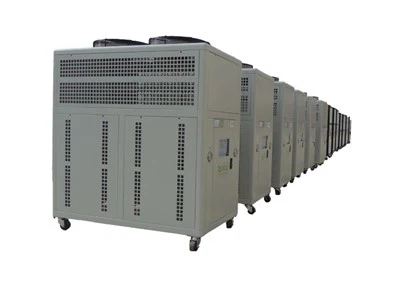 Industrial Chillers For Reactor VesselsIndustrial Chiller for Reactor Vessels:. 1.Cooling Capacity:35.2kw/hr. 2.Temperature Range: -5 ~ 20degs. 3.Water Volume: 6800L/hr.Add to Inquiry
 -
 Chiller Water Cooled For Printing MachineChiller Water Cooled For Printing Machine. 1.Cooling Capacity: 70kw/hr. 2.Temperature Outlet: 5degs~ 15degs. 3.Water Pump:3kw(12m3/hr, 5bar). 4.Stainless Steel pipe, tank and evaporator.Add to Inquiry
 -
 Chemical Industrial Process Water ChillerA chemical industrial process water chiller is a specialized type of chiller designed specifically to support various chemical processes by controlling the temperature of liquids, gases, or equipmentAdd to Inquiry
 -
 360 Kw Air Screw Water Chiller Used For DehumidifierA water chiller for a dehumidifier is a device that helps reduce humidity levels in the air by cooling water and using it to remove moisture from the surrounding environment.The chilled water is thenAdd to Inquiry
 -
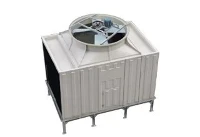
 220 Kw Water Cooled Chiller With Cooling TowerThe chiller cools water to remove heat from processes or spaces, while the cooling tower dissipates the accumulated heat by evaporating a portion of the water, ensuring efficient and effectiveAdd to Inquiry
 -
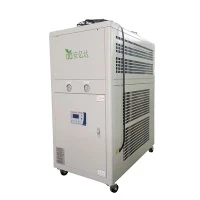
 Industrial Water Chiller EfficiencyIndustrial Water Chiller Model: AYD-120WS1.Cooling Capacity: 281.1kw2.Power Input: 99.4kw3.Efficiency: 2.834.Refrigerant: R404AAdd to Inquiry

- Tel: +86-755-84074988
- Fax: 86-755-89260199
- Email: info@aydzl.com
- Add: NO.1 jilongshan industrial park, pingdi street
A water chiller is a refrigeration system designed to remove heat from water or any other process fluid, effectively lowering its temperature. It's utilized across various industries and applications where controlled cooling is essential, such as in industrial processes, HVAC systems, medical equipment, data centers, and laboratories.
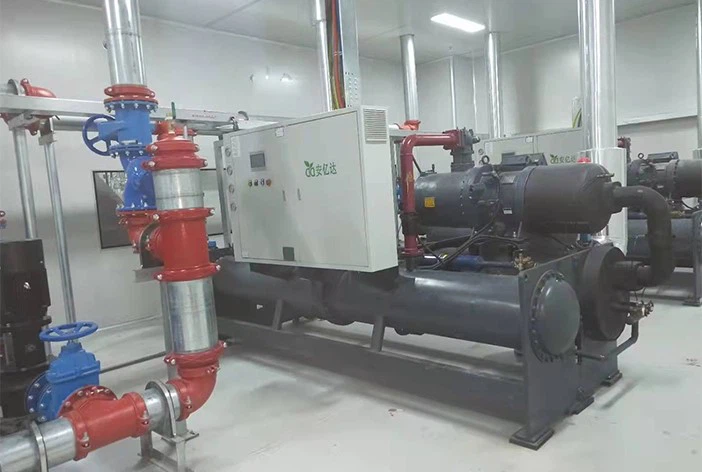
Types Of Water Chiller
Based on how the heat is removed, water chillers can be classified into:
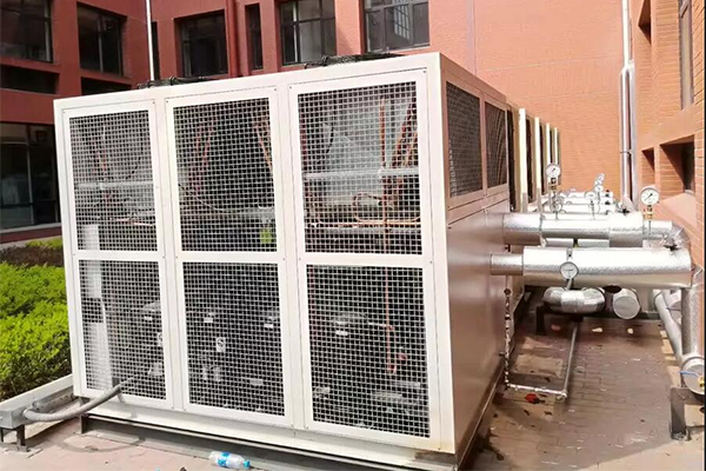
1.Air cooled chillers
These types of water chillers have condensers designed to exchange heat from refrigerant to ambient air. They use air as the condensing medium.
An air-cooled condenser unit typically features finned coils. This increases the surface area of the condenser in contact with air. One or more fans are used to blow air over the finned coil to further improve heat transfer. The amount of heat rejected by an air-cooled condenser depends on the rate of airflow over the coils and the air‘s dry-bulb temperature.
The advantage of using air-cooled water chillers is their simplicity and low cost. They can be installed as stand-alone units without requiring additional infrastructures such as cooling water supply lines and cooling towers.
2.Water cooled chillers:
As the name suggests, water-cooled water chillers use water as the condensing medium. Since these types of chillers also use water as their cooling medium, two water loops exist in the system.
Water-cooled condensers typically operate with a cooling tower. Cooling towers are heat exchangers, but instead of the usual conduction-convection type of heat exchangers, it generates cooling by bringing water and air into contact. They supply cooling water to the condenser unit which is used to cool the refrigerant.
Water-cooled chillers are used in large industrial plants where a cooling water supply is readily available. Cooling is provided to the condenser at a much higher efficiency compared to air-cooled types.
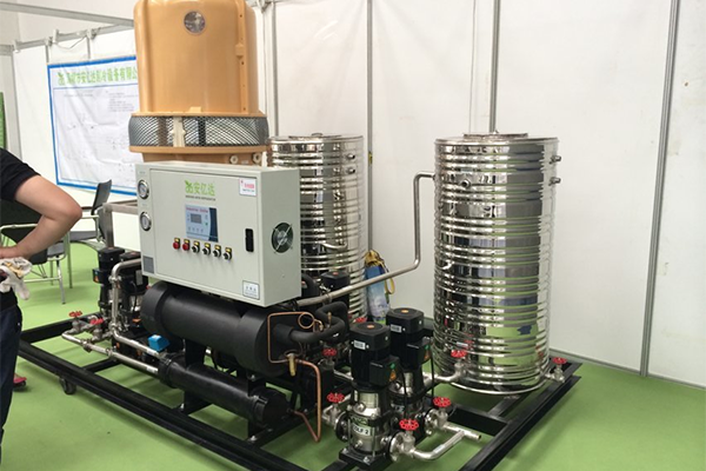
What Are Benefits Of Water Chiller?
Simple structure and easy operation:
With few spare parts, repair and maintenance are very convenient and simple. It has a low repair rate and long service life. It has stable uniform circular motion, low noise, small vibration and light weight when running at low load.
High stability
The chiller can achieve precise temperature control with high stability and accuracy. This means that the water chiller can maintain a constant cooling effect at any time and under any environmental conditions, so that production and experiment work can be better guaranteed and supported.
High efficiency
The main advantages of using shell-and-tube condensers and evaporators in industrial chiller products are simple structure, convenient maintenance, and high heat exchange efficiency. Its heat exchange performance is more than 20% higher than that of ordinary products, and it also has less cooling loss, easy oil return, and the heat transfer tube will not freeze and crack.
Greater Flexibility
Water chiller systems are very flexible industrial devices that can be modified to operate in various indoor and outdoor settings. Dependent on operator requirements, water-cooled chillers can be manufactured in a vast range of sizes and configurations to ensure maximum process compatibility.
Easy to maintain
The main components of a water-cooled chiller include the compressor, electronic control system, condenser, etc., all of which can be easily disassembled and repaired. At the same time, many units are equipped with self-diagnostic functions and intelligent alarm systems, which can reduce labor maintenance costs and time and improve the life and reliability of the units.
Wide range of application
Due to the high efficiency and stability of chillers, they are widely used in industrial refrigeration, medicine, electronic devices, food processing and heat treatment.05
What is water chiller used for?
Industrial Processes: Maintaining precise low temperatures for chemical reactions, polymerization, and crystallization.
Pharmaceutical and Biotechnology: Preserving vaccines, drugs, and biological samples in storage and transportation.
Laboratory Research: Enabling experiments involving superconductors, cryopreservation, and cold-temperature physics.
Food and Beverage: Quick cooling and freezing of food products, including specialty items like ice cream.
Automotive Testing: Simulating extreme cold conditions for vehicle and component performance evaluation.
Aerospace Testing: Verifying aircraft component and material performance under extreme cold conditions.
Environmental Chambers: Creating controlled temperature and humidity conditions for testing products and materials.
Medical and Healthcare: Storing and preserving blood, tissue samples, pharmaceuticals, and vaccines.
Chiller maintenance is an important part of ensuring the efficient operation of the entire refrigeration system and extending the life of the equipment. The following is a detailed description of the cleaning and maintenance steps for chillers and how these steps can help improve system efficiency and extend equipment life.
1. Check water flow regularly
Water flow is critical to the heat exchange efficiency of the chiller. Regularly checking water flow to ensure there is no reduction or blockage is critical to maintaining efficient operation of the unit.
2. Clean filters and heat exchangers
The cleanliness of filters and heat exchangers directly affects the performance of the chiller. Regular cleaning of these parts to remove dust and debris can significantly improve heat exchange efficiency.
3. Check and replace refrigerant
Refrigerant is a critical substance in a chiller and its charge and pressure need to be checked regularly. Insufficient or leaking refrigerant can cause system efficiency to decrease and may even damage equipment.
4. Check the electrical system
The electrical system is the control center of the chiller. Check the motor, control board and sensors to make sure there are no short circuits or signs of deterioration to avoid unplanned downtime.
5. Check and maintain water pumps
The water pump is an important part of the chiller and is responsible for water circulation. Regularly check the operating status of the water pump to ensure there is no leakage or blockage to ensure smooth water circulation.
6. Preventive Maintenance Plan
Developing and executing a preventive maintenance plan ensures that all critical components of your chiller receive appropriate attention, thereby reducing the risk of failure.
Cases Display
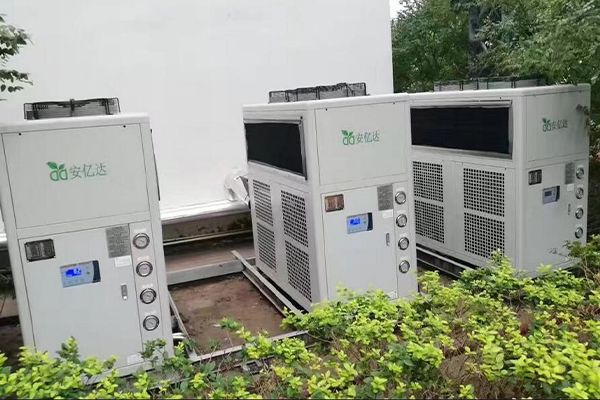
8hp air cooled water chiller, 20kw cooling capacity with 2~ 15degrees outlet.

60HP water cooled screw chiller, double compressors, 170kw cooling capacity, 7degrees outlet.

170HP air cooled water chiller, 550kw cooling capacity, 7degrees outlet.
How to Cooperate with Us

Confirm the Water Chiller Model
We need to know the cooling capacity, outlet temperature, refrigerant, power supply, and other specifications.
Operating Conditions
Please specify the cooling medium and the working conditions (e.g., whether it’s a corrosive environment like near the seaside or if explosion-proofing is needed).
Drawing Confirmation
Our engineers will provide the structure, dimensions, and other details for your confirmation.
Proceed to Manufacture
We will install, pressure test, and then prepare the unit for shipment.
FAQ
FAQ
Q: How to calculate heat removal rate (kw/hr) from water?
Q: Can industrial water chillers be energy-efficient?
Q: Can industrial water chillers be connected to a centralized control system?
Q: How long does an industrial water chiller typically last?
Q: What is the warranty of water chiller?
Q: What is the HS code of the water chiller?
Q: What is inside a water chiller?
Q: Which gas used in water chiller?
Q: How efficient are water chillers?
Q: What’s the difference between air cooled and water cooled chiller?
ANYDA is well acknowledged as one of the leading manufacturers of water chiller in China. All of the water chiller products for sale are made in our professional plant. Should you're interested in it, please be free to get the high-tech equipment with competitive price from us.
, industrial chiller , chiller unit , chilled water system , water chiller cooling system , cooling water chiller , chiller system