The chilled water process refers to the production and distribution of chilled water for various applications such as air conditioning, industrial processes, and cooling systems. It is commonly used in large commercial buildings, hospitals, data centers, and manufacturing plants.
The chilled water process typically involves several components working together to provide effective cooling. The key components include chillers, cooling towers, pumps, and a network of pipes and valves.

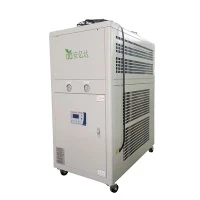
The heart of the chilled water process is the chiller. A chiller is a refrigeration machine that removes heat from the water and lowers its temperature. It operates on the basic principle of refrigeration by compressing a refrigerant gas, which absorbs heat from the water, and then expanding the gas to release the heat into the atmosphere or another medium.
The chilled water produced by the chiller is circulated through a network of pipes to the areas that require cooling. These pipes are insulated to minimize heat gain or loss during transportation. Valves and control systems regulate the flow and temperature of the chilled water to maintain the desired conditions.
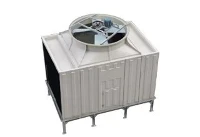
In large-scale applications, cooling towers are used to dissipate the heat absorbed by the chilled water. The warm water from the chiller is pumped to the cooling tower, where it is exposed to ambient air. The cooling tower facilitates heat transfer through evaporation, where a small portion of the water evaporates, carrying away heat and lowering the temperature of the remaining water. The cooled water is then returned to the chiller for recooling.

Pumps play a crucial role in the chilled water process by circulating the water through the system. They provide the necessary pressure to overcome resistance in the pipes, ensuring adequate flow rates and efficient cooling. Pump speed and operation can be controlled based on the cooling load requirements, optimizing energy consumption.
A well-designed chilled water process offers several advantages. First, it provides a centralized cooling solution, allowing for better control and monitoring of the cooling system. Second, it enables the use of chilled water as a versatile cooling medium, which can be distributed to various areas and equipment using a network of pipes. This eliminates the need for individual air conditioning units, reducing maintenance and installation costs.
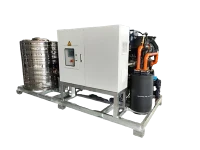
150HP air cooled chiller for dehumidifer specs:
|
Item |
Specification / Supplier |
||
|
Model |
AYD-150A |
||
|
Cooling capacity |
kw/hr |
420.5 |
|
|
ton/hr |
119.56 |
||
|
Power input |
kw |
153.6 |
|
|
Current |
A |
276.48 |
|
|
Temp Outlet (℃) |
7 |
||
|
Power Supply |
380V-3N-50HZ |
||
|
refrigerant control |
Expansion valve |
||
|
Refrigeration circle |
one |
||
|
refrigerant |
R407C |
||
|
Dimension(mm)L×W×H |
6000*2000*2200 |
||
|
Compressor |
Style |
Semi-hermetic screw type |
|
|
Quantity(set) |
1 |
||
|
Model |
RC2-550B |
||
|
Compressor Power(kw) |
140.4 |
||
|
Start Way |
100%-75%-50%-25% |
||
|
Condenser
|
Style |
Fin and Copper Pipe |
|
|
Air Volume(m3/h) |
150000 |
||
|
Fan Qty(pcs) |
6 |
||
|
Fan Power(kw) |
13.2 |
||
|
Evaporator |
Style |
Shell and Copper Tube |
|
|
Cold water flow(m3/h) |
72.4 |
||
|
Pipe size(DN) |
125 |
||
|
Protector Device |
1.Phase protector 2.Fan overload protector 3.High/low voltage protector 4.overheat protector 5.Anti-freeze protector |
||
|
Unit Weight(kg) |
3950 |
||
|
Main Parts |
|||
|
Compressor |
Hanbell |
||
|
Condenser |
Anyda |
||
|
Electronic |
LS / Carlo |
||
|
Expansion Valve |
Emerson |
||
|
Electrical control |
Siemens |
||

The chilled water process typically involves the following steps:
1. Chiller Plant: The process starts with a chiller plant, which consists of one or more chillers. A chiller is a refrigeration machine that cools the water by removing heat from it. Chillers can use various refrigerants such as R-134a or R-410A to achieve the cooling effect.
2. Cooling Water Circulation: Water from a cooling tower or another water source is circulated through the chiller's evaporator, where it absorbs heat from the refrigerant. This heat transfer process cools down the water.
3. Chilled Water Production: The cooled water from the chiller's evaporator is then collected in a chilled water storage tank or directly pumped into a distribution system. The temperature of the chilled water is typically around 4-7 degrees Celsius (39-45 degrees Fahrenheit), depending on the application.
4. Distribution System: The chilled water is distributed through a network of insulated pipes to various locations within the building or facility. These pipes are typically made of steel or plastic and are sized according to the cooling load requirements.
5. Air Handling Units (AHUs): At each destination, the chilled water is used in air handling units, which consist of coils or heat exchangers. The chilled water flows through these coils, and air is passed over them, resulting in the transfer of coldness from the water to the air. This cooled air is then supplied to the conditioned space, providing the desired cooling effect.
6. Return Water: After the chilled water has absorbed heat from the air handling units, it returns to the chiller plant through a separate set of pipes known as the return water system. The return water, now warmer, goes back to the chiller's condenser, where it releases heat to the environment through a cooling tower or other heat rejection methods.
7. Control System: A control system monitors and regulates the entire chilled water process, ensuring the appropriate temperature and flow rates are maintained throughout the system. It may incorporate sensors, valves, pumps, and temperature controllers to optimize performance and energy efficiency.
Overall, the chilled water process provides an efficient and effective method for cooling large spaces or equipment, allowing for centralized cooling systems and flexible cooling capacity depending on the specific needs of a building or facility.
Delivery, payment and warranty
1. delivery time: 30-40days
2. payment: 30% as the deposit, 70% paid off before delivery
3. warranty: 1year. If any parts break during this time, we will send you replacements (less express shipping costs) and ongoing technical assistance.

Hot Tags: chilled water process China, manufacturers, plant, price, for sale