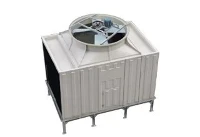
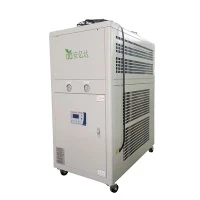
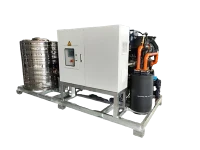
An industrial water cooling tower is a sophisticated heat rejection device used in various large-scale industrial processes to dissipate excess heat generated during operations. These towers play a pivotal role in maintaining optimal operating temperatures for machinery, equipment, and processes, ensuring efficiency and preventing overheating-induced damage.
Introduction to Industrial Water Cooling Towers
Industrial cooling towers are essential components in industries such as power generation, manufacturing, petrochemicals, and HVAC systems. Their primary function is to transfer waste heat from processes to the atmosphere through the evaporation of water. This process aids in regulating temperatures within permissible limits, safeguarding machinery and maintaining productivity.
Components and Design
1. Fill Media: These towers contain fill media, typically made of materials like PVC, wood, or metal, providing a large surface area for water to spread over. This maximizes the contact between air and water, facilitating efficient heat transfer.
2. Distribution System: A network of pipes and nozzles evenly disperses hot water over the fill media. This ensures uniform cooling across the tower.
3. Fan or Air Movement System: Industrial cooling towers employ large fans or air movement systems to draw air through the tower. This enhances evaporation and aids in heat dissipation.
4. Drift Eliminators: These components prevent water droplets from being carried away with the exhaust air, conserving water and minimizing environmental impact.
5. Basin: A basin collects cooled water before it is recirculated through the system.

Working Principle
The tower's operation begins when hot water, carrying excess heat from industrial processes, enters the tower. This water is spread over the fill media, creating a large surface area for exposure to air. Simultaneously, the fans draw air through the tower, causing a portion of the water to evaporate. This evaporation process absorbs heat from the remaining water, cooling it down.
As the water cools, it collects in the basin and is either recirculated back into the industrial process for reuse or discharged, depending on the specific application and water conservation practices.

|
No. |
Item |
Unit |
Specs |
|
A. |
Summary |
||
|
1 |
Name |
|
Closed Type Cooling Tower |
|
2 |
Model |
|
AYD-200T |
|
3 |
Cooling Capacity |
kcal/h |
1000000 |
|
4 |
Design Pressure |
Mpa |
1.0 |
|
5 |
Test Pressure |
Mpa |
1.2 |
|
6 |
Cooling Water Flow |
m3/h |
200 |
|
7 |
Water Inlet Temp |
℃ |
37 |
|
8 |
Water Outlet Temp |
℃ |
32 |
|
9 |
Flying Water Loss(%) |
|
≤0.005% |
|
10 |
Water Pipe Size |
mm |
DN150*2 |
|
11 |
Connection Size(supply/overflow/drain) |
mm |
DN32 |
|
12 |
Net Weight |
kg |
3200 |
|
13 |
Running Weight |
Kg |
6800 |
|
14 |
Dimension(L x W x H) |
mm |
5800*2000*4500 |
|
B. |
Fan System |
||
|
1 |
Each Unit Fan Qty |
台 |
3 |
|
2 |
Driving Mode |
|
direct |
|
3 |
Fan Air Volume |
m3/h |
240000 |
|
4 |
Motor Water Proof Class |
|
IP55 |
|
5 |
Motor Insulation Class |
|
F |
|
6 |
Single Fan Motor Power |
kw |
7.5 |
|
7 |
Power Supply |
|
3PH/415V.50Hz |
|
8 |
Air Duct Material |
|
Hot Dip Galvanized |
|
C. |
Sprinkler System |
||
|
1 |
Pump Qty |
unit |
1 |
|
2 |
Water Pump Type |
|
Spray Pump |
|
3 |
Pump Body Material |
|
Cast-iron |
|
4 |
Motor Insulation Class |
|
F |
|
5 |
Single Pump Flow |
m3/h |
200 |
|
6 |
Single Pump Power |
kw |
5.5 |
|
7 |
Lift |
m |
6 |
|
D. |
Heat Exchange Tube |
||
|
1 |
Heat Exchange Tube Material |
|
304 # |
|
2 |
Coil Thickness |
mm |
0.8 |
|
3 |
Diameter |
mm |
19 |
|
4 |
Manifold Material |
|
304 # |
|
5 |
Connection way for manifold and exchange tube |
|
welding |
|
6 |
Heat Exchange Coil Design Pressure |
Mpa |
1.0 |
|
7 |
Heat Exchange Coil Test Pressure |
Mpa |
1.2 |
|
8 |
Flange |
|
PN10 |
|
E. |
Main Parts Material |
||
|
1 |
Spray Tube Material |
|
PVC |
|
2 |
Sprinkler |
|
ABS |
|
3 |
Water Collector |
|
PVC |
|
4 |
Water Supply Way |
|
Float Ball Valve |
|
5 |
Fastener |
|
Q235 |
|
6 |
Structure Material |
|
Zinc Al Magnesium Plate |
|
7 |
Structure Anti Corrosive Way |
|
Zinc Al Magnesium Plate |
|
8 |
Structure Anti Corrosive Thickness |
mm |
0.06 |
|
9 |
Outer Panel Thickness |
mm |
2 |
|
10 |
Outer Panel Anti corrosive Way |
|
Zinc Al Magnesium Plate |
|
11 |
Outer Casing Material |
|
Zinc Al Magnesium Plate |
Industrial water cooling towers come in various types, each designed to suit specific industrial needs, environmental conditions, and efficiency requirements. Here are some common types:
1. Natural Draft Cooling Tower:
Working Principle: Utilizes natural convection currents to draw air through the tower. It has a tall structure with a large chimney effect.
Application: Often used in large power plants due to their massive size and efficiency in handling high volumes of water.
2. Mechanical Draft Cooling Tower:
Forced Draft: Uses fans at the base to force air through the tower.
Induced Draft: Fans are situated at the top, creating a suction that pulls air through the tower.
Application: Common in various industries, including refineries, chemical plants, and HVAC systems.
3. Crossflow Cooling Tower:
Design: Water flows vertically downward while air moves horizontally across the water flow.
Advantages: More compact design, easier maintenance, and less water splashing.
Application: Suitable for HVAC systems and medium-sized industrial applications.
4. Counterflow Cooling Tower:
Design: Water flows vertically downward while air moves vertically upward, countering the water flow.
Advantages: Enhanced heat transfer efficiency compared to crossflow designs.
Application: Commonly used in power plants and large industrial processes requiring high efficiency.
5. Open Circuit Cooling Tower:
Operation: Water comes into direct contact with the atmosphere, allowing a portion of it to evaporate and cool down.
Application: Found in industries where water quality isn't critical, such as power generation and HVAC systems.
6. Closed Circuit Cooling Tower:
Operation: Uses a secondary fluid (usually clean water or a refrigerant) that circulates within a closed system, indirectly transferring heat to the primary water loop.
Advantages: Minimizes water consumption and prevents contamination of the primary water loop.
Application: Suitable for applications requiring controlled water quality, like data centers or sensitive industrial processes.
Each type of industrial water cooling tower offers distinct advantages depending on factors like the scale of operation, water quality requirements, space constraints, and environmental considerations. The choice of cooling tower type depends on the specific needs of the industry or application in question.
Applications
1. Power Plants: In thermal power plants, cooling towers cool the water used in the condenser to increase its efficiency and maintain optimal operating conditions.
2. Manufacturing Industries: Industries such as steel, chemical, and automotive use cooling towers to maintain the temperature of various processes and equipment.
3. HVAC Systems: Buildings and commercial facilities use cooling towers in air conditioning systems to regulate indoor temperatures.
Importance and Maintenance
Industrial water cooling towers are vital for sustaining efficient operations and preventing costly breakdowns. Regular maintenance is crucial:
1. Cleaning: Regular removal of algae, scale, and debris prevents clogging and maintains optimal heat exchange.
Inspections: Periodic checks for leaks, corrosion, and mechanical issues are essential to ensure proper functioning.
2. Water Treatment: Proper water treatment prevents scaling, corrosion, and microbial growth, preserving the tower's efficiency.
3. Environmental Impact and Advancements
While cooling towers are efficient, they consume significant amounts of water and may contribute to water scarcity in some regions. Advancements in technology, such as dry cooling systems or hybrid cooling towers that reduce water consumption, aim to address these concerns while maintaining effective heat dissipation.
Conclusion
Industrial water cooling towers are indispensable for various industrial processes, playing a critical role in maintaining operational efficiency and preventing overheating-related damages. Their design, working principles, applications, and maintenance practices ensure optimal performance while addressing environmental concerns associated with water usage. Continued advancements aim to strike a balance between efficiency and environmental sustainability in cooling tower technology.
Hot Tags: industrial water cooling tower China, manufacturers, plant, price, for sale