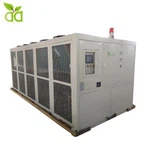
The Critical Role of Chillers in Injection Molding
In the world of modern manufacturing, injection molding stands as a colossus, responsible for the ubiquitous plastic components that define our daily lives-from the dashboard of a car to the cap on a water bottle. While the spotlight often falls on the high-pressure injection units and the precision-engineered molds, there is an unsung hero working silently in the background that dictates both the pace and quality of production: the industrial chiller. Far from being a simple refrigeration unit, the chiller is a sophisticated thermal management system that is fundamental to the economic and qualitative success of the injection molding process.
The Thermodynamic Imperative
To understand the chiller's role, one must first understand the injection molding cycle itself. The process is a rapid dance of thermodynamics: polymer pellets are melted at high temperatures and forcibly injected into a mold cavity. Within this mold, the plastic must transition from a molten state back to a solid state so the part can be ejected. This transition is the cooling phase, and it is paradoxically both the most time-consuming and the most critical stage of the entire cycle .
The cooling phase can account for approximately 50 to 80 percent of the total cycle time. Every second shaved off this phase directly translates into increased production output. However, simply ejecting the part as fast as possible is a recipe for disaster. If cooling is too slow, warpage and sink marks appear; if it is uneven, internal stresses deform the component. This is where the precision of an industrial chiller becomes indispensable. A chiller's job is to circulate a coolant (usually water or a water/glycol mixture) through temperature-controlled channels within the mold, extracting heat at a consistent and controlled rate .
Dual-Circuit Cooling: Protecting the Mold and the Machine
The application of chillers in injection molding is not limited to the mold itself. A modern injection molding machine generates heat from two primary sources, often requiring a dual-circuit approach to cooling.
The first and most critical circuit is mold cooling. Here, the chiller must provide coolant at a precise, often low temperature-typically between 10°C and 15°C-with minimal fluctuation . Advanced temperature control units (TCUs) integrated with chillers can achieve set points as low as -5°C for specialized engineering resins, or as high as 90°C depending on the application . This precise control ensures the dimensional stability of the part, enhances surface finish by eliminating defects like blistering or opacification, and accelerates the solidification process .
The second circuit is hydraulic and machine cooling. The hydraulic pumps that drive the clamping and injection units generate immense heat. If left unchecked, this heat degrades hydraulic oil, leading to seal failure, reduced component efficiency, and unplanned downtime . A dedicated cooling loop, often operating at a higher temperature than the mold circuit, removes this waste heat, protecting the machine's vital components and ensuring consistent mechanical performance.
Technological Evolution: From Simple Cooling to Intelligent Synchronization
The technology behind these chillers has evolved dramatically. Traditional central chillers, while effective, often operate at full capacity regardless of demand. Today's state-of-the-art systems, such as those highlighted by manufacturers like Frigel and Parker, offer "one-package" solutions that are revolutionizing the shop floor .
The cutting edge of this technology is process-synchronized cooling. Units like the Frigel Microgel series are designed to digitally synchronize with the molding machine's cycle. Instead of cooling continuously, they perform "deep cooling" only during the exact moment the mold is closed and cooling is required. This intelligent application of energy can reduce cooling time by up to 25% and increase overall productivity by as much as 33% compared to standard temperature control units .
Furthermore, these smart systems utilize advanced controls and "wizard" functions to automatically search for and store the optimal cooling parameters for specific molds. By memorizing the ideal flow rate and temperature for each tool, they eliminate guesswork and ensure perfect repeatability, even when a mold is taken out of storage and put back into production months later .
Energy Efficiency and Sustainability
In an era of rising energy costs, the efficiency of cooling systems is under intense scrutiny. Modern chiller systems address this through innovations like free-cooling and adiabatic coolers. Free-cooling valves automatically bypass the energy-intensive compressor when the ambient temperature is low enough to provide sufficient cooling on its own . Real-world case studies demonstrate the staggering potential of these upgrades. For instance, an upgrade at Fisher Plastics in the UK, which integrated an adiabatic cooler with existing chillers, resulted in annual energy savings of over 350,000 kWh. During low ambient conditions, the system achieved a coefficient of performance (COP) of 30.7, requiring only 6.5kW of energy to meet a 200kW cooling demand .
Conclusion
The application of a chiller in injection molding is multifaceted. It is a tool for quality assurance, preventing defects and ensuring dimensional accuracy. It is a driver of productivity, shrinking cycle times and boosting throughput. It is a protector of capital assets, preserving the life of hydraulic systems and molds. And increasingly, it is a cornerstone of sustainable manufacturing, leveraging intelligent controls and free-cooling technologies to drastically reduce energy consumption. As the demand for complex, high-quality plastic parts continues to grow, the role of the chiller will only become more central, solidifying its status not just as an accessory, but as a critical determinant of manufacturing success.