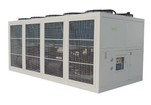
Precautions for installation of industrial chillers
We need to stop thinking that the chiller is easy to install, we only need to connect it to electricity and water, and it can work well by itself. Pay more attention to a few details, the chiller will repay you with better performance and longer service life.
Here are the precautions you need to know before proceeding:
1. Choice of installation location.
For air-cooled chillers, we need a well-ventilated open space. Ensure that there are no obstacles or walls within 1m, otherwise it will cause difficulty in air circulation and heat dissipation. The key is that we need to ensure that the heat discharged from the chiller can be moved outside instead of circulating in a small space. The distance of the stopper also ensures maintenance space. If you plan to install an air-cooled chiller in a poorly ventilated space, you need to consider installing a duct on the top of the chiller near the condenser fan to ensure heat dissipation.
For water-cooled chillers, we only need to reserve enough space for maintenance, because the heat of the chiller is transferred to the cooling tower through the water.
2. Place the chiller on the ground.
Industrial chillers must be placed on a firm and level concrete floor that can support the weight of the chiller. The level of the floor should be within 6mm. The chiller will vibrate when it is running. If the floor is not strong or level, the chiller is easy to move, especially the portable chiller with casters. Rough ground will amplify the vibration of the chiller, and long-term operation will cause serious failure.
For large chillers, we need to build concrete foundations for them. It is necessary to fill the 50-100mm absorption gap with sand or asphalt around the foundation. There should be bolt holes on the foundation to fasten the chiller base and the concrete foundation together.
After doing the above things, we can put the chiller on the foundation. Then we need a level to check if there is any tilt. If so, place parallel lines between the chiller base and the concrete foundation to adjust.
3. Pipe and wire preparation.
In the specification table of Pesh Chiller, there are the connection size and the maximum amperage of the equipment. Refer to the correct selection of pipe and wire size.
4. Install a filter at the entrance of the chiller.
If you are not very confident about the water quality of the factory, you must filter to avoid failure of the chiller water circuit.
For smaller devices, you can use the following cup filter.
For larger units, a Y-type filter is recommended.
For water-cooled chillers, it is important to install a filter at the entrance of the condenser, because in most cases, the cooling tower water contains foreign matter. You can choose a suitable filter system according to your own situation at any time.
5. Follow the instructions provided by Peishi Chiller for correct piping.
Make sure you know which port you should connect to. Although there will be signs on the inlet and outlet of each Pesh Chiller, please check it carefully.
It is important to know where the pump should be placed in the cooling system. This is a short reminder that the pump always draws water from the source. The so-called source refers to the equipment that holds the most water in the circuit, such as external water tanks, cooling tower water basins, etc.
If you do not use a self-priming pump, please make sure that the position of the pump is lower than the water level in the container, otherwise the pump may run idly.
Place valves on each side of each device, including chillers, pumps, and water tanks. You need to maintain these devices from time to time. When you have to inspect equipment, you definitely don't want to waste water in the circuit and destroy it anywhere.
water pressure gauge is a good choice, you can determine whether your waterway is blocked or leaking by monitoring the pressure value.
6. Anti-vibration.
For larger cooling projects, it is strongly recommended to use flexible joints on each side of the equipment with motors. Flexible joints can save your water pipes from many troubles, including leaks, noise, etc.
The water pipe should be built on a solid support, without relying on a chiller or pump.
7. Maintenance.
You may consider installing some auxiliary equipment, such as hanging rails